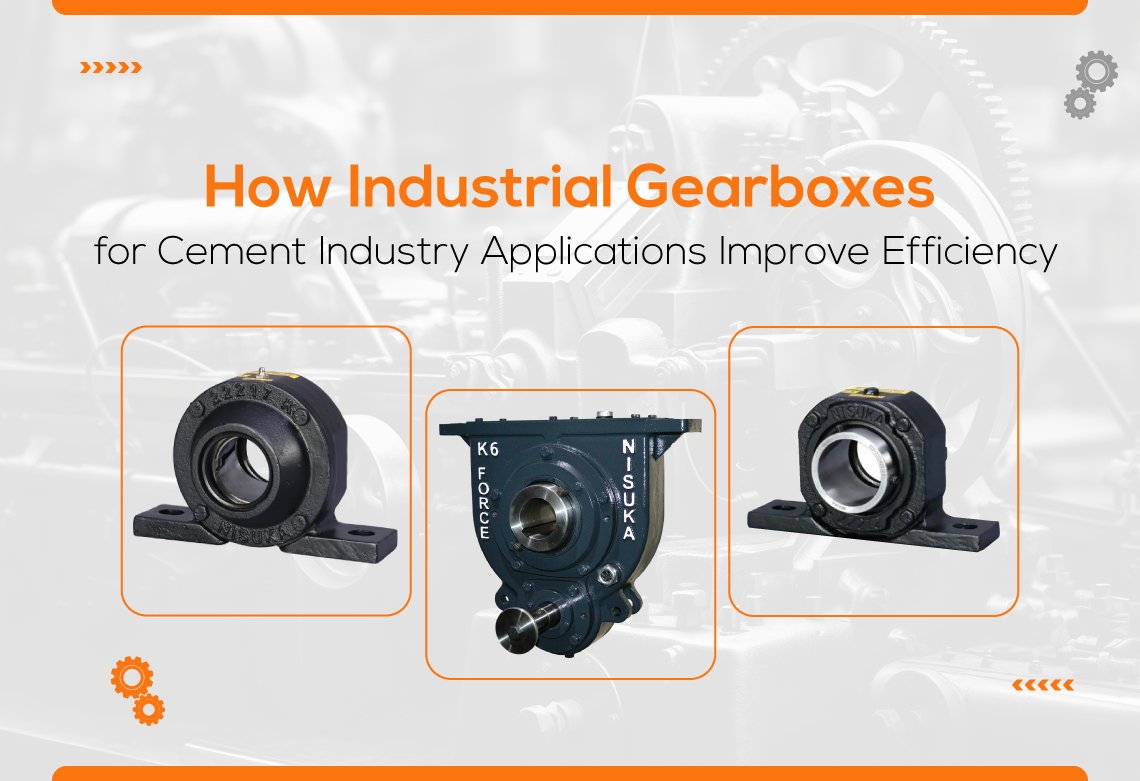
How Industrial Gearboxes for Cement Industry Applications Improve Efficiency

The cement manufacturing industry depends on heavy-duty machinery that must operate reliably under high loads, continuous production schedules, and demanding environmental conditions. From crushing raw materials to grinding clinker and transporting cement, every stage requires efficient mechanical power transmission. Even small improvements in equipment performance can help reduce energy waste, minimize unplanned downtime, and improve overall plant productivity.

One of the key components supporting these operations is the industrial gearbox. It transfers power from an electric motor to driven equipment while adjusting rotational speed and torque to meet specific operating requirements.

Choosing the right industrial gearboxes for cement industry applications can help cement plants maintain consistent production, manage heavy loads, and improve the reliability of critical machinery.

In this guide, we explain how industrial gearboxes contribute to cement manufacturing efficiency, where they are used, which factors affect their performance, and how to select the right gearbox for different plant applications.

What Are Industrial Gearboxes for the Cement Industry?
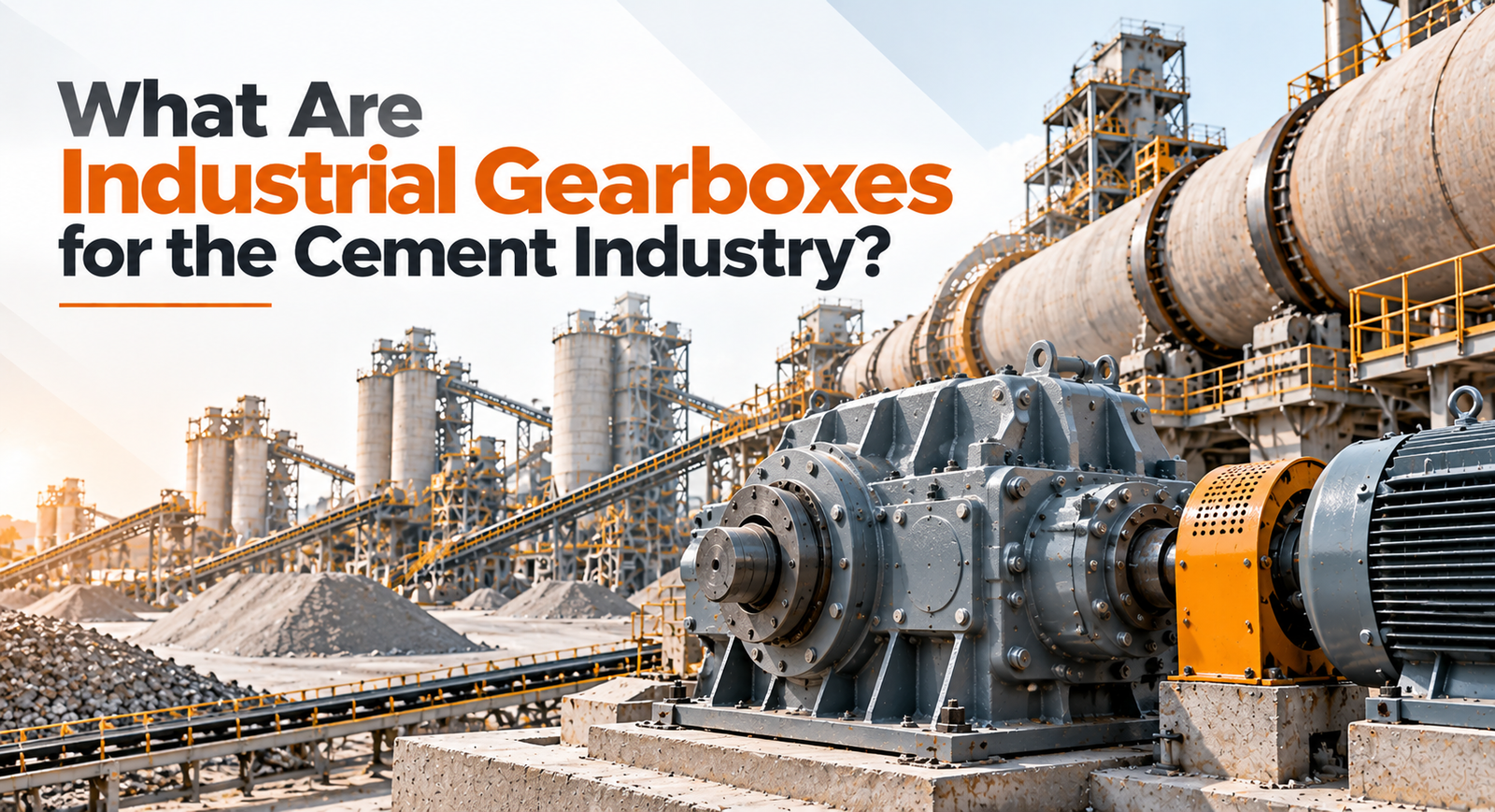
What Are Industrial Gearboxes for the Cement Industry?

An industrial gearbox is a mechanical power transmission device that transfers rotational power between a motor and a machine. Its primary functions include reducing speed, increasing torque, and matching the motor’s output characteristics to the requirements of the driven equipment.

In cement plants, machinery often needs high torque at relatively low operating speeds. A motor may rotate too quickly to drive a conveyor, crusher, or other heavy-duty machine directly. A gearbox provides the necessary speed reduction and torque multiplication.

For example, a conveyor system transporting limestone requires controlled movement and sufficient torque to handle the material load. A suitably selected gearbox helps the conveyor start, operate, and maintain movement under the expected working conditions.

The performance of industrial gearboxes for cement industry applications depends on several factors, including:

  • Gearbox type and gear ratio
  • Required output torque and operating speed
  • Load characteristics and starting conditions
  • Operating hours and duty cycle
  • Lubrication and cooling arrangements
  • Dust, temperature, and vibration levels
  • Installation quality and maintenance practices

A gearbox must be selected according to the machine’s actual operating requirements rather than motor power alone.

For a broader introduction to gearbox technology, read Nisuka Industries’ Ultimate Guide to Industrial Gearboxes.

Why Are Industrial Gearboxes Important in Cement Manufacturing?

Cement production involves several interconnected processes. A problem in one critical machine can affect upstream and downstream operations, potentially reducing plant output.

Gearboxes support these processes by delivering controlled mechanical power to equipment that handles heavy materials and operates for extended periods.

1.Supporting Heavy-Duty Operations

Cement plants handle limestone, clay, gypsum, coal, clinker, and finished cement. Moving and processing these materials requires machinery capable of handling substantial loads.

Heavy-duty industrial gearboxes help transmit the torque required by conveyors, crushers, feeders, and other equipment. Selecting a gearbox with suitable torque capacity and service factor helps it accommodate expected operating loads and foreseeable load variations.

2. Controlling Machine Speed

Different machines require different operating speeds. A conveyor belt needs controlled movement, while a crusher or grinding system operates according to its own process requirements.

A gearbox adjusts motor speed to match the needs of the driven machine. Correct speed selection helps maintain material flow, supports consistent processing, and reduces the risk of operating equipment outside its intended range.

3. Improving Power Transmission

A properly selected and maintained gearbox transfers power efficiently from the motor to the driven equipment. However, no gearbox is completely loss-free: friction, gear meshing, bearings, seals, and lubrication all contribute to power losses.

Using an appropriate gearbox design, maintaining proper lubrication, and avoiding excessive loading can help reduce these losses.

4. Supporting Reliable Production

Unexpected equipment failure can interrupt cement production and increase maintenance costs. A correctly specified gearbox, installed according to manufacturer recommendations, helps reduce avoidable mechanical problems.

Reliability also depends on the complete drive system, including the motor, couplings, shafts, bearings, foundation, lubrication, and control equipment.

Key Applications of Industrial Gearboxes in Cement Plants
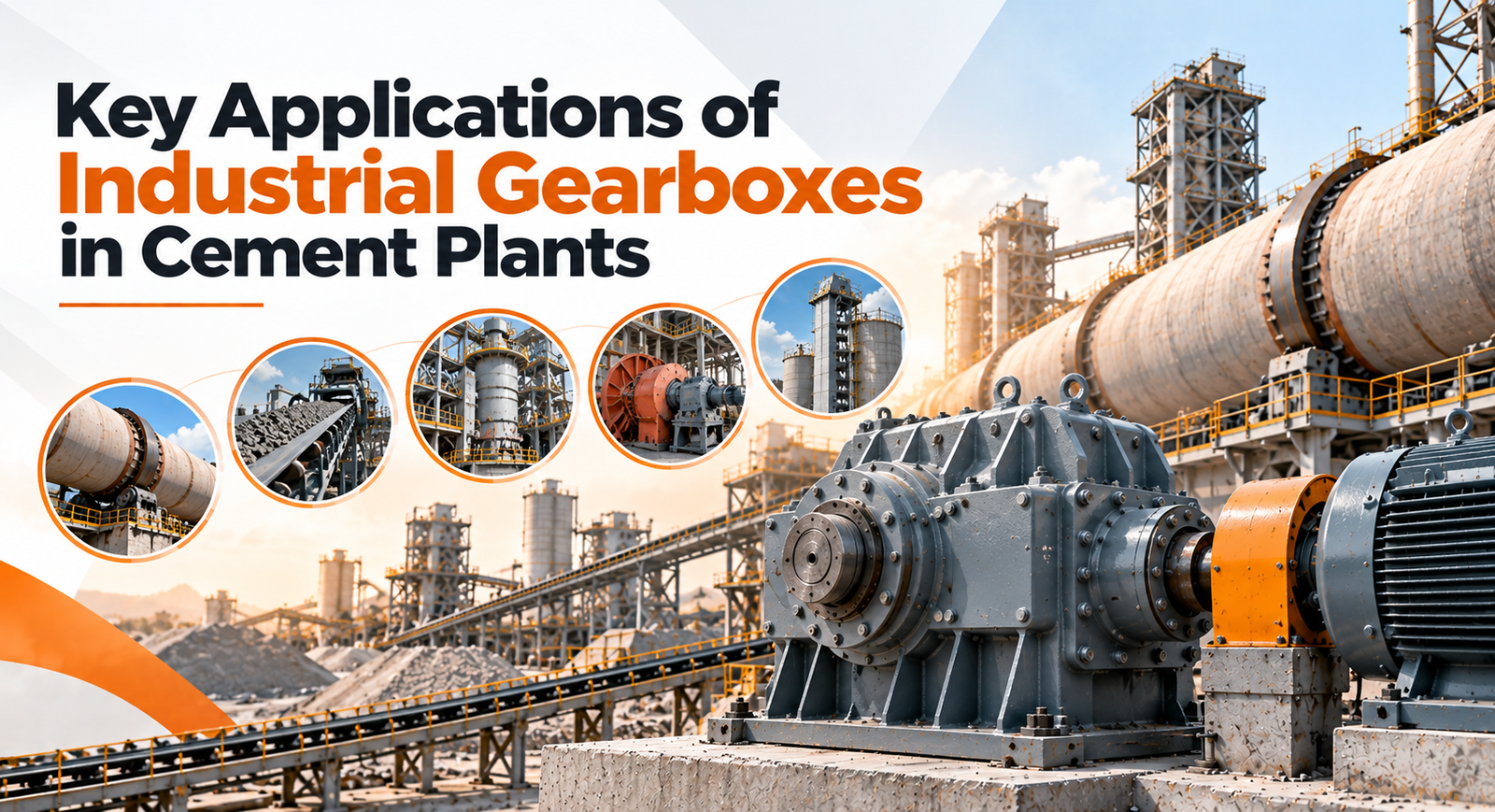
Key Applications of Industrial Gearboxes in Cement Plants

Industrial gearboxes for cement industry applications are used across several stages of manufacturing. Each application has different torque, speed, load, and environmental requirements.

1. Limestone and Raw Material Conveyors

Conveyors transport raw materials between storage areas, crushers, processing units, and production sections. They are essential to maintaining a steady flow of materials throughout the plant.

Conveyor gearboxes reduce motor speed and provide the torque needed to move loaded belts. They must be selected with consideration for belt speed, material weight, conveyor length, incline, starting frequency, and the possibility of shock loading.

A suitable conveyor gearbox can support:

  • Controlled belt movement
  • Reliable material transportation
  • Appropriate torque delivery
  • Reduced risk of drive-system overload
  • Consistent operation during production

2. Crushers and Material Processing Equipment

Crushers reduce large pieces of limestone and other raw materials to a size suitable for further processing. These machines can experience significant load variations as material enters the crushing chamber.

The gearbox and drive arrangement must accommodate the required operating speed, torque, starting conditions, and potential transient loads.

Choosing a gearbox without sufficient capacity can increase the risk of overheating, excessive wear, and mechanical failure. Conversely, an unnecessarily oversized unit may increase initial costs and occupy more installation space than required.

Correct engineering assessment helps balance performance, reliability, and cost.

3. Raw Material Grinding Systems

Grinding systems reduce raw materials to the fineness required for cement production. These systems can involve high power demands and continuous operating schedules.

The gearbox must match the grinding equipment’s required speed and torque while accommodating the operating conditions specified by the equipment manufacturer.

Gearbox selection should consider:

  • Required power and output torque
  • Starting and operating loads
  • Continuous-duty requirements
  • Lubrication and cooling needs
  • Alignment and installation requirements
  • Inspection and maintenance accessibility

Because grinding systems differ substantially in design, the gearbox arrangement must be chosen for the specific machine rather than based on a generic cement-plant specification.

4. Clinker Handling and Conveying

Grinding systems reduce raw materials to the fineness required for cement production. These systems can involve high power demands and continuous operating schedules.

The gearbox must match the grinding equipment’s required speed and torque while accommodating the operating conditions specified by the equipment manufacturer.

Gearbox selection should consider:

  • Required power and output torque
  • Starting and operating loads
  • Continuous-duty requirements
  • Lubrication and cooling needs
  • Alignment and installation requirements
  • Inspection and maintenance accessibility

Because grinding systems differ substantially in design, the gearbox arrangement must be chosen for the specific machine rather than based on a generic cement-plant specification.

5. Cement Grinding and Finished Product Handling

After clinker is combined with other constituents, grinding produces the finished cement. Conveyors and other material-handling systems then transport the product to storage and packaging areas.

Industrial gear reducers help these systems operate at the required speed and torque. Correctly matched drive components can support smooth material flow and help avoid unnecessary stress on belts, shafts, bearings, and connected equipment.

How Industrial Gearboxes Improve Efficiency in Cement Manufacturing

Gearboxes improve manufacturing efficiency by helping machines operate at the required speed and torque. Their contribution is not limited to mechanical power transmission; correct selection and maintenance can also support energy management and production reliability.

1. Reducing Unnecessary Energy Losses

Gearbox efficiency is the ratio of mechanical power delivered at the output to mechanical power supplied at the input. Some power is lost through friction, gear meshing, bearings, seals, and other mechanisms.

The actual efficiency depends on gearbox design, gear type, size, operating speed, load, lubrication, and maintenance condition.

To improve efficiency, plant operators should:

  • Select a gearbox appropriate for the application.
  • Operate within the manufacturer’s specified limits.
  • Use the recommended lubricant and lubrication interval.
  • Maintain correct alignment and mounting.
  • Investigate abnormal temperatures, noise, and vibration.
  • Avoid prolonged operation under unsuitable loads.

It is important to remember that gearbox efficiency alone does not determine the total energy consumption of a machine. Motor efficiency, load profile, controls, and the driven equipment also affect overall system performance.

2. Delivering the Required Torque

Torque is the turning force that allows a machine to overcome resistance and move a load. Many cement-plant applications require high torque at relatively low output speeds.

A gearbox reduces speed while increasing available torque, subject to transmission losses. This enables a motor and driven machine to operate within their intended performance ranges.

Insufficient torque capacity may lead to poor starting performance, overloads, or premature component wear. Correct torque calculation is therefore essential when choosing industrial gearboxes for cement industry operations.

3. Supporting Consistent Production

Consistent material movement is essential for coordinating different stages of cement manufacturing. An unreliable drive can interrupt material supply and affect the performance of connected equipment.

Gearboxes selected for the correct operating conditions help machinery maintain the required speed and load capacity.

Regular inspection and timely maintenance further support production continuity by identifying problems before they develop into major failures.

4. Minimizing Unplanned Downtime

A gearbox failure can require equipment shutdown, repair work, replacement parts, and production rescheduling.

Preventive maintenance helps identify warning signs such as:

  • Unusual noise or vibration
  • Abnormal operating temperatures
  • Lubricant leakage
  • Contaminated or degraded lubricant
  • Loose mounting hardware
  • Shaft misalignment
  • Unexpected changes in operating performance

The maintenance team should investigate these symptoms promptly and follow the gearbox manufacturer’s service instructions.

5. Improving Equipment Service Life

Gear teeth, bearings, seals, shafts, and housings experience mechanical stresses during operation. Overloading, poor lubrication, contamination, and misalignment can accelerate deterioration.

Correct gearbox sizing, suitable lubrication, appropriate installation, and regular condition checks help reduce avoidable wear.

This can improve equipment availability and help control lifecycle costs. Actual service life depends on operating conditions, design, maintenance, and installation quality.

6. Helping Control Maintenance Costs

The purchase price is only one part of a gearbox’s total cost. Maintenance labour, lubricant, spare parts, energy consumption, downtime, and replacement requirements also influence long-term cost.

A gearbox that suits the application and receives proper maintenance can help avoid unnecessary expenses.

Plant managers should evaluate the total cost of ownership instead of selecting equipment based on purchase price alone.

Factors to Consider When Selecting Industrial Gearboxes for the Cement Industry

Selecting the correct gearbox begins with understanding the machine’s operating requirements. The following factors help engineers and maintenance teams make a more informed decision.

1. Calculate the Required Power and Torque

Start with the driven machine’s power, operating speed, load characteristics, and starting conditions.

For a rotating system, the relationship between power, torque, and rotational speed is important. In practical terms, reducing output speed through a gearbox generally increases available output torque, allowing for transmission losses.

The gearbox should be rated for the required operating load and foreseeable load variations.

2. Select the Correct Gear Ratio

The gear ratio determines how the input speed relates to the output speed.

An incorrect ratio can cause a machine to operate too quickly or too slowly, potentially affecting production performance and mechanical loading.

Confirm the motor speed and required output speed before finalizing the gearbox specification.

3. Evaluate the Duty Cycle

Some machines operate intermittently, while others run continuously for long shifts or around the clock.

The gearbox specification should account for operating hours, starting frequency, load variations, and the severity of service.

A suitable service factor should be determined according to the gearbox manufacturer’s guidance and the actual application.

4. Consider Dust and Temperature

Cement plants can expose machinery to airborne dust, contamination, vibration, and challenging ambient conditions.

Gearbox housing, seals, lubricant, cooling arrangements, and installation location should be appropriate for the environment.

Where surrounding temperatures are elevated, the designer should confirm that the gearbox can maintain acceptable operating temperatures under the expected load.

5. Check Mounting and Alignment Requirements

Correct mounting helps ensure that the gearbox operates as intended. Misalignment, inadequate support, or unsuitable shaft connections can increase vibration and stress on bearings and connected components.

Verify mounting orientation, shaft dimensions, torque-arm arrangements where applicable, coupling requirements, and installation clearances before commissioning.

6. Review Lubrication Requirements

Lubrication reduces friction and wear between moving components and helps manage heat.

The correct lubricant type, viscosity, quantity, and change interval depend on the gearbox design and operating conditions.

Follow the manufacturer’s recommendations rather than assuming that one lubricant is suitable for every industrial gearbox.

7. Assess Maintenance and Spare-Part Availability

Maintenance teams should be able to inspect the gearbox, monitor its condition, and obtain suitable replacement components when required.

Before purchasing, clarify the maintenance schedule, available technical support, spare-part availability, warranty conditions, and documentation provided by the manufacturer.

For additional selection guidance, read Key Factors to Choosing the Right Conveyor Gearbox.

Best Practices for Maintaining Industrial Gearboxes in Cement Plants
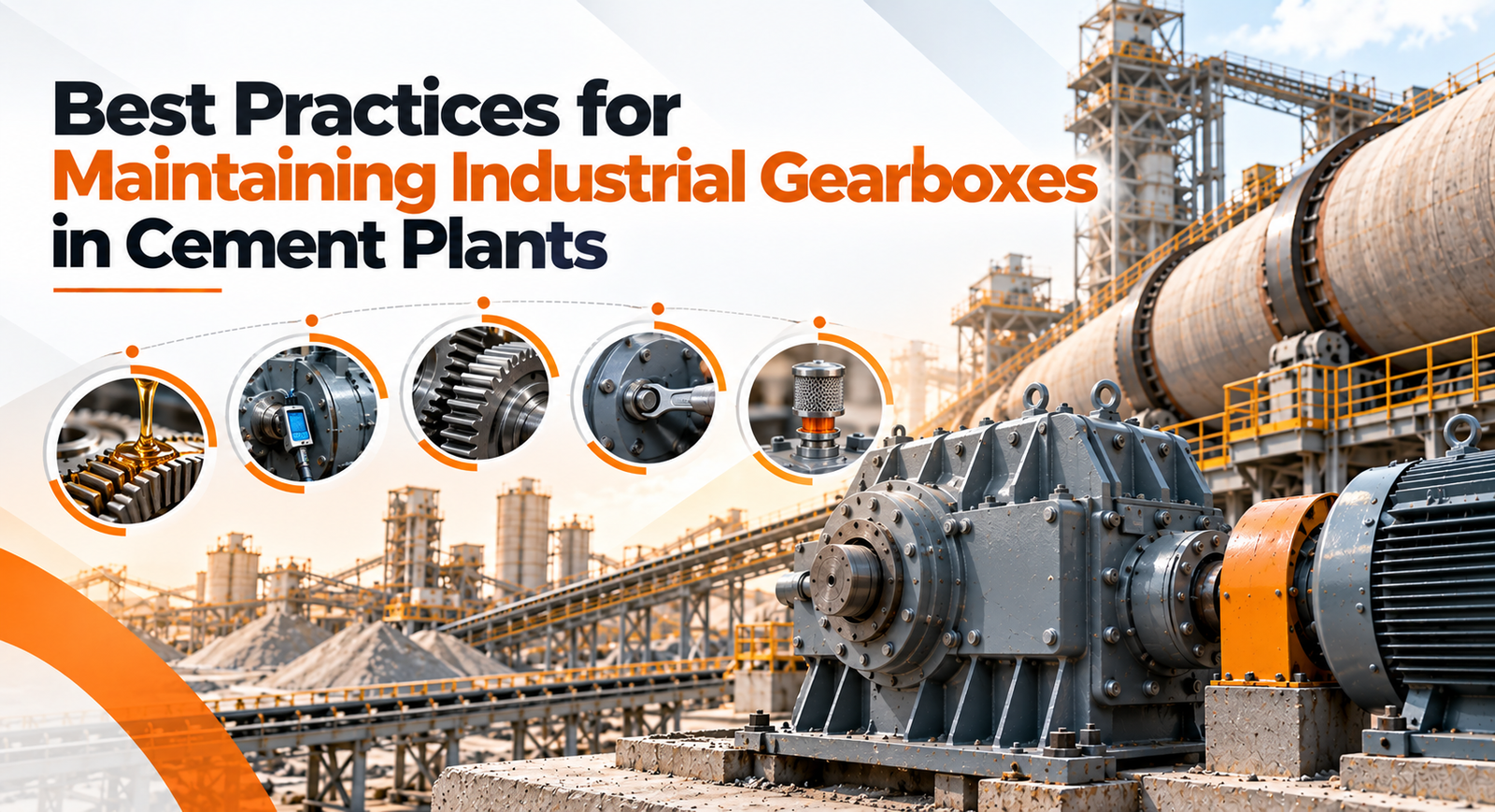
Best Practices for Maintaining Industrial Gearboxes in Cement Plants

Even a well-designed gearbox requires appropriate maintenance. A structured maintenance program helps plant teams detect problems early and maintain reliable operation.

1. Conduct Regular Visual Inspections

Inspect the housing, mounting points, seals, fasteners, and surrounding area. Look for oil leakage, physical damage, loose components, or signs of contamination.

Record findings so that changes can be identified over time.

2. Monitor Noise and Vibration

Unusual noise or increased vibration can indicate problems with gears, bearings, alignment, mounting, or connected machinery.

Establish a baseline during normal operation and investigate significant changes. Condition monitoring may be useful for critical drives.

3. Maintain Proper Lubrication

Check lubricant levels and condition according to the manufacturer’s instructions. Use the specified lubricant and replace it at the recommended intervals.

If contamination or lubricant deterioration is suspected, investigate the cause instead of simply topping up the oil.

4. Verify Alignment and Mounting

Check lubricant levels and condition according to the manufacturer’s instructions. Use the specified lubricant and replace it at the recommended intervals.

If contamination or lubricant deterioration is suspected, investigate the cause instead of simply topping up the oil.

5. Follow a Preventive Maintenance Schedule

A practical maintenance plan should include inspections, lubrication checks, temperature monitoring, vibration checks where appropriate, and scheduled servicing.

The frequency should reflect the equipment manufacturer’s instructions, operating conditions, and the criticality of the application.

6. Train Maintenance Personnel

Maintenance staff should understand the gearbox’s operating limits, lubrication requirements, warning signs, and safe maintenance procedures.

Proper training can help ensure that issues are identified and addressed consistently.

Conclusion

Industrial gearboxes play an important role in cement manufacturing by controlling speed, transmitting torque, and supporting the operation of heavy-duty machinery. They are used in conveyor systems, crushers, grinding equipment, clinker handling, and other applications that require dependable mechanical power transmission.

Choosing the right industrial gearboxes for cement industry applications involves more than matching motor power. Engineers must also consider torque, speed ratio, duty cycle, environmental conditions, mounting arrangements, lubrication, and maintenance requirements.

A correctly selected gearbox, combined with proper installation and a preventive maintenance programme, can help improve operational reliability, reduce avoidable downtime, and manage long-term equipment costs.

For cement manufacturers looking for industrial power transmission solutions, exploring the Nisuka Industries gearbox range is a useful starting point. Share your application requirements with the manufacturer to identify a gearbox solution suited to your plant’s operating conditions.

FAQS

They help machinery operate at the required speed and torque. Correct selection, proper lubrication, suitable installation, and preventive maintenance can reduce avoidable power losses, support reliable operation, and minimize unplanned downtime.

The correct gearbox depends on conveyor speed, load, torque, starting conditions, mounting arrangement, and environmental factors. An SMSR gearbox may be suitable for certain conveyor applications, but the final choice should be confirmed against the system’s engineering requirements.

Important factors include gearbox design, gear ratio, load, operating speed, lubrication, alignment, temperature, contamination, mounting quality, and maintenance practices.

Routine inspections, lubricant checks, temperature and vibration monitoring, and timely investigation of abnormal noise or leakage can help identify developing problems before they cause major failures.
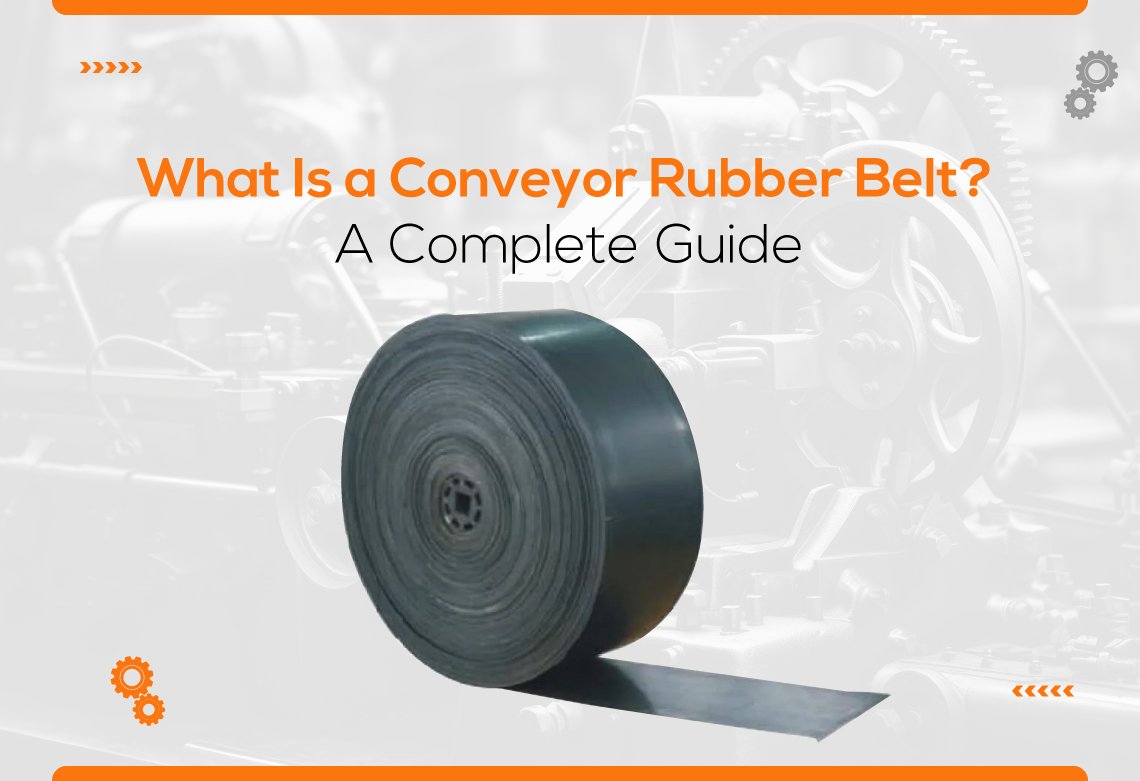
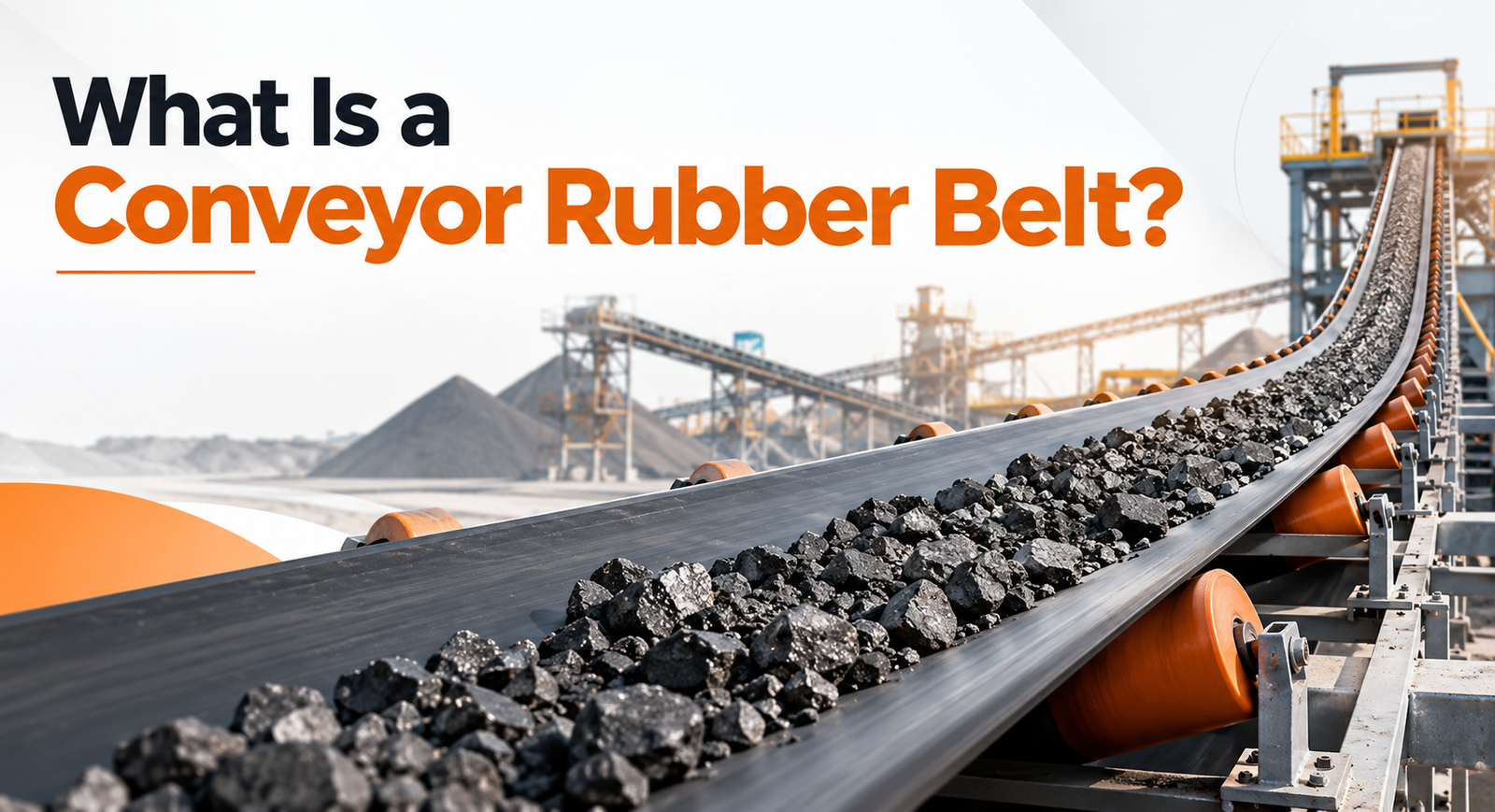
What Is a Conveyor Rubber Belt? – A Complete Guide

Conveyor systems play an important role in industrial material handling by moving raw materials, work-in-progress products, and finished goods between different stages of an operation. From transporting extracted minerals in mining facilities to moving aggregates in quarries and materials through cement plants, these systems support a more organized and continuous flow of materials.

At the centre of many of these systems is the conveyor rubber belt. It provides the moving surface that carries materials along a defined route, working with pulleys, rollers, tensioning arrangements, and drive equipment. However, selecting a suitable belt involves more than identifying its width or comparing purchase prices. Material characteristics, load, throughput, operating speed, conveyor geometry, and environmental exposure all influence suitability.

Understanding what a conveyor rubber belt is, how it works, and how it interacts with other mechanical components helps engineers, plant managers, and procurement teams make better equipment decisions.

This guide explains conveyor rubber belt operation, industrial applications, practical benefits, selection considerations, maintenance requirements, and common operating problems. It also outlines how the belt fits into the complete conveyor system, helping buyers evaluate their requirements before consulting a manufacturer or conveyor engineering professional.

What Is a Conveyor Rubber Belt?

What Is a Conveyor Rubber Belt?

A conveyor rubber belt is a continuous conveying surface used to transport materials along a conveyor system. Depending on its design, it may contain rubber covers and reinforcement layers that help it withstand operating tension, abrasion, flexing, and environmental exposure. Its construction must match the material being conveyed and the mechanical demands of the application.

Unlike a complete conveyor system, which includes the drive, pulleys, support rollers, frame and other components, the belt is the moving element that carries the material.

In bulk material handling, the belt commonly travels in a continuous loop. Material is loaded onto its carrying side, transported along the conveyor route, and discharged at a designated transfer point. The empty return side then travels back towards the loading area.

The belt’s suitability depends on its intended duty. A conveyor transporting abrasive crushed stone has different requirements from one handling packaged components in a manufacturing facility. The selected construction must accommodate the required strength, flexibility, surface properties, and operating conditions.

How Does a Conveyor Rubber Belt Work?

A conveyor rubber belt works by circulating around pulleys while a drive arrangement supplies the force required to move it. An electric motor and gearbox may provide the necessary speed reduction and torque, depending on the conveyor design.

The operating sequence generally involves these steps:

  1. Power generation: An electric motor converts electrical energy into rotational motion.
  2. Speed and torque control: A gearbox, where required, adjusts the output speed and torque to suit the conveyor’s operating requirements.
  3. Belt movement: The drive pulley transfers motion to the belt through available traction. The drive arrangement must provide sufficient traction for the operating load.
  4. Material transportation: Material is deposited onto the carrying side and moves along the conveyor route.
  5. Belt support: Idler rollers support the belt and load at appropriate points, according to the conveyor configuration.
  6. Material discharge: The belt passes around a discharge pulley or another designed transfer arrangement, allowing the material to leave the conveying surface.
  7. Return movement: The belt travels back towards the loading point to repeat the cycle.

The exact arrangement depends on the conveyor layout, drive location, loading method, and discharge requirements.

Belt tension is necessary to maintain the required drive traction and support stable operation. Belt tracking is equally important because the belt must remain correctly positioned on the conveyor. Inadequate tension, excessive tension, misaligned pulleys, or uneven material loading can contribute to operating problems.

Benefits of Using Conveyor Rubber Belts

The benefits of conveyor rubber belts depend on suitable design, correct installation and appropriate maintenance. When these conditions are met, they can support reliable material movement across a wide range of industrial processes.

1. Continuous Material Transportation

A conveyor belt can move material repeatedly along a defined route without requiring individual loads to be transported manually. This is particularly useful in production facilities, quarries and bulk material handling operations where materials must move between several process stages.

The practical benefit depends on whether the conveyor’s capacity and speed match the requirements of the connected equipment.

2. Support for Bulk Material Handling

A conveyor belt can move material repeatedly along a defined route without requiring individual loads to be transported manually. This is particularly useful in production facilities, quarries and bulk material handling operations where materials must move between several process stages.

The practical benefit depends on whether the conveyor’s capacity and speed match the requirements of the connected equipment.

3. Integration With Automated Processes

A conveyor belt can move material repeatedly along a defined route without requiring individual loads to be transported manually. This is particularly useful in production facilities, quarries and bulk material handling operations where materials must move between several process stages.

The practical benefit depends on whether the conveyor’s capacity and speed match the requirements of the connected equipment.

4. Adaptability to Different Conveyor Layouts

Conveyor systems can be configured for horizontal transportation, inclined movement and different transfer arrangements. The belt must be selected to suit the geometry and material-handling requirements of the installation.

Inclined applications, for instance, may require particular consideration of surface characteristics and material rollback.

5. Potential Reduction in Manual Material Movement

Where a conveyor replaces repetitive manual transportation, it may reduce the need for workers to move individual loads between process locations. The suitability of this approach depends on the material, workplace layout, safety requirements, and process design.

6. Support for Planned Material Flow

A properly designed conveyor can help coordinate material movement between connected production stages. When its capacity matches upstream and downstream equipment, it can contribute to a more predictable operating process.

7. Operational Efficiency Through Correct Selection

A belt that suits the application and operates with compatible pulleys, rollers and tensioning equipment can help maintain stable material movement. However, operational efficiency also depends on loading conditions, alignment, drive performance, maintenance, and the overall conveyor design.

These benefits should be evaluated against the requirements of the specific operation rather than assumed for every installation.

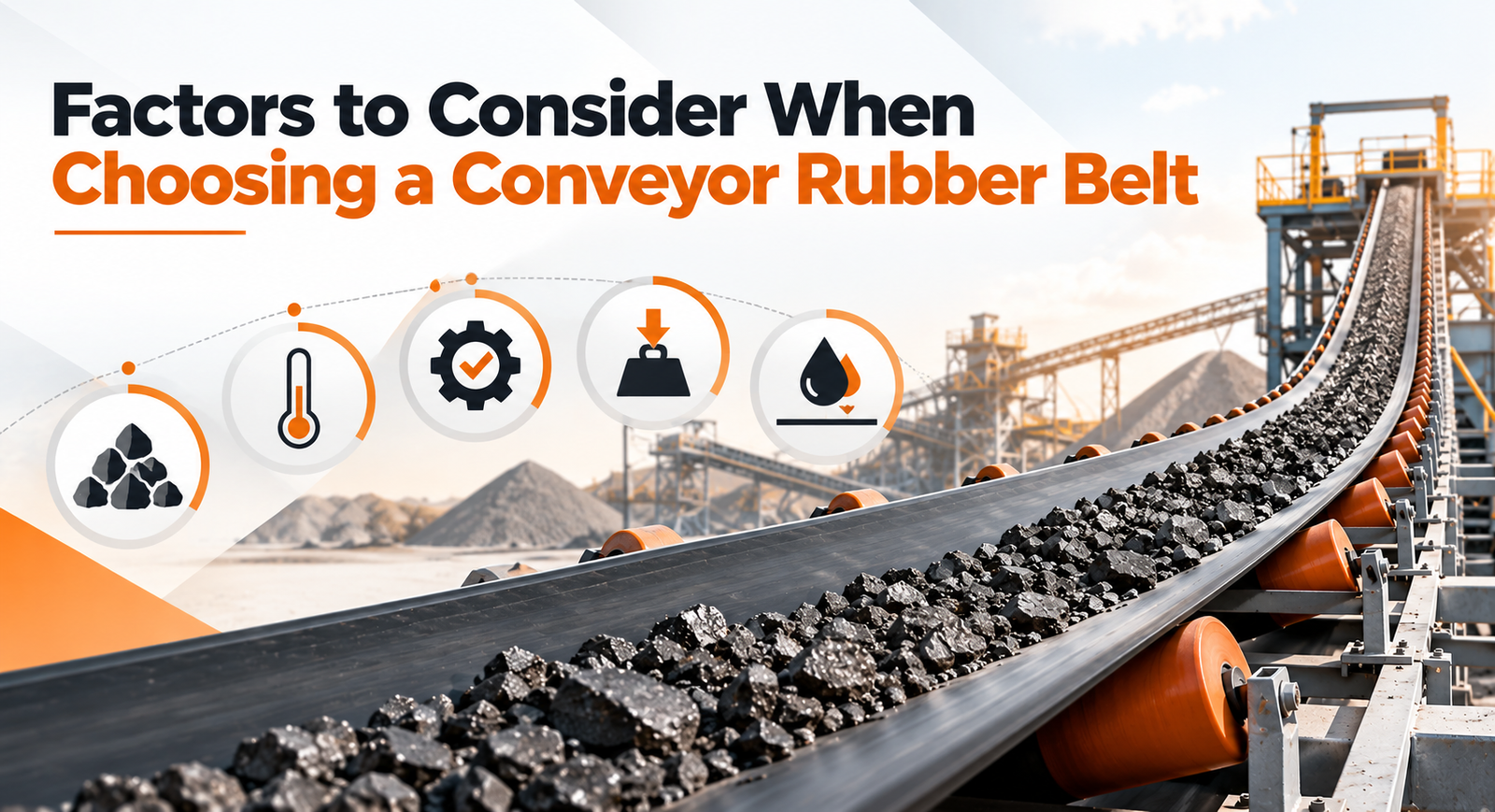
Factors to Consider When Choosing a Conveyor Rubber Belt

Factors to Consider When Choosing a Conveyor Rubber Belt

The most important factors to consider when choosing a conveyor rubber belt relate to the material, required throughput, mechanical loading, conveyor geometry, environment and maintenance requirements. A suitable belt must meet the demands of the complete application.

1. Material Characteristics

Start by identifying the material the conveyor will carry. Relevant properties include particle size, bulk density, weight, abrasiveness, sharp edges, moisture content and temperature. Chemical exposure may also matter in certain industrial processes.

These characteristics influence the required belt cover and construction. For example, sharp-edged aggregate can cause different wear patterns from fine, relatively smooth material. Damp material may also affect loading, discharge and material buildup.

Record the actual material properties before requesting a belt specification.

2. Load and Conveying Capacity

The weight of material on the belt, the required throughput and the belt’s allowable operating capacity are related but distinct considerations.

Throughput is generally expressed as mass transported per unit of time, such as tonnes per hour. The required capacity depends on factors including belt width, belt speed, material density, loading cross-section and the conveyor’s geometry.

Peak loading must also be considered. A conveyor that normally handles a moderate flow may experience greater loading during surges or uneven feeding.

Capacity should be established through appropriate engineering calculations and verified against the conveyor and belt manufacturer’s data. A simple estimate based on speed alone is insufficient.

3. Conveyor Speed

Conveyor belt speed affects how much material can be transported, how material is loaded and how it behaves at transfer and discharge points.

Higher speed does not automatically mean better performance. It must be evaluated alongside belt width, material properties, loading arrangements and the requirements of connected equipment.

The selected speed should support the required throughput while maintaining acceptable material control and operating conditions.

4. Conveyor Length, Incline, and Configuration

The distance between pulleys, conveyor elevation, incline, take-up arrangement and transfer-point locations all influence belt selection.

Longer conveyors can involve different tension requirements from shorter installations. Inclined conveyors require additional consideration of material movement and the belt surface’s ability to carry the intended load without unacceptable rollback.

Pulley diameter and arrangement also matter because the belt must flex around the pulleys without exceeding the limits specified for its construction.

5. Operating Environment

Assess the conditions in which the conveyor will operate. These may include:

  • Dust and abrasive particles.
  • Moisture and wet material.
  • Outdoor exposure and weather variation.
  • Elevated or changing temperatures.
  • Contact with oils or chemicals.
  • Material contamination and buildup.

The belt’s rubber compound, covers and reinforcement must be appropriate for the actual exposure conditions. Do not assume that a belt suitable for a dry indoor plant will also suit a wet or chemically exposed installation.

6. Belt Strength and Reinforcement

The belt must withstand the operating tension and other mechanical demands of the conveyor. Its strength requirements depend on the conveyor design, loading, drive arrangement, belt length, and operating duty.

Reinforcement forms part of the belt’s construction and influences how it responds to tension and flexing. The appropriate construction should be determined from the application’s engineering requirements, not selected using a generic rule.

Always verify the proposed belt’s rated characteristics and construction with the manufacturer.

7. Pulley Compatibility and Belt Tension

The belt, pulleys and tensioning arrangement must work together. Pulley diameter, drive traction, alignment and the available take-up range all influence belt operation.

Insufficient tension may contribute to drive slippage, while excessive tension can increase mechanical loading on the belt and associated components. Neither problem should be addressed simply by increasing or decreasing tension without checking the manufacturer’s requirements.

Where the conveyor design requires a dedicated tensioning component, reviewing a suitable conveyor belt tensioner can help buyers understand the role of tension management in the complete system.

8. Maintenance and Service Requirements

Maintenance access should be considered before purchasing a belt. Engineers should assess whether they can inspect the belt, check tracking, examine joints and edges, remove material buildup and service the pulleys and rollers safely.

The belt’s construction, operating environment and duty cycle influence inspection and replacement requirements. Manufacturer guidance should determine appropriate maintenance practices and inspection frequency.

A belt that appears suitable on paper may be less appropriate if its installation or inspection requirements cannot be managed effectively at the site.

How to Choose the Right Conveyor Rubber Belt for Different Industrial Applications

Selecting the right conveyor rubber belt requires a systematic evaluation of the material, mechanical demands and operating environment. The following process provides a practical starting point for industrial buyers and engineering teams.

Step 1: Identify the material

Record the material type, particle size, bulk density, abrasiveness, moisture, temperature and any chemical exposure.

Step 2: Establish throughput and operating duty

Determine normal and peak material flow, required conveyor speed, daily operating hours and the expected duty cycle.

Step 3: Confirm conveyor geometry

Document conveyor length, incline, pulley locations, loading points, discharge points and transfer arrangements.

Step 4: Check mechanical compatibility

Review belt strength, construction, pulley diameter, tensioning arrangements, rollers and drive requirements.

Step 5: Compare specifications and lifecycle requirements

Evaluate manufacturer data, maintenance access, expected wear, replacement planning and total ownership cost before confirming the specification.

How Conveyor Rubber Belts Work With Other Conveyor Components

A conveyor rubber belt is only one element of the material-handling assembly. Its performance depends partly on the compatibility and condition of the mechanical components that support, drive and guide it.

1. Conveyor Head and Tail Drums

Head and tail drums guide the belt around the conveyor loop. In a conventional arrangement, the drive pulley transfers force to the belt, while the tail pulley supports the opposite end. Other arrangements may use different drive or pulley configurations.

Pulley alignment and compatibility with the belt are important for stable operation.

2. Conveyor Idler Rollers

Idler rollers support the belt along its carrying and return paths. Their arrangement depends on the conveyor layout, material load, and required belt support.

Worn, seized, or incorrectly aligned rollers can contribute to belt damage, increased resistance or tracking problems.

Where relevant, industrial buyers can review conveyor idler rollers when evaluating the supporting components needed for their conveyor design.

3. Conveyor Belt Tensioners

Tensioning arrangements help maintain the required belt tension as specified by the system design. Their function is to provide the necessary take-up while accommodating the intended operating conditions.

The correct arrangement depends on conveyor geometry, belt construction and tension requirements. Over-tensioning should not be used as a substitute for correcting alignment or drive problems.

4. Electric Motors and SMSR Gearboxes

The electric motor supplies power, while a gearbox may reduce rotational speed and provide the output torque required by the drive system.

An SMSR gearbox is one option used in conveyor drive applications. Its mounting arrangement and operating characteristics must match the conveyor’s requirements.

Nisuka Industries lists SMSR gearboxes among its industrial product offerings, alongside several conveyor-related components.

5. Pulleys, Bearings and Bearing Housings

V-belt pulleys, taper-lock pulleys, bearings and bearing housings may form part of a conveyor drive or support arrangement, depending on the design.

Their dimensions, mounting, load capacity, alignment and rotational requirements must be compatible with the assembly. A bearing or pulley should not be selected solely on the basis of shaft size without checking its intended duty.

For additional background, see the explanation of what is a bearing?.

Other Material-Handling Components

Magnetic separators, suspension magnets and magnetic drum pulleys may be incorporated into selected conveyor installations to separate unwanted ferrous material from a material stream. They perform a different function from the belt itself and are included only when the process requires magnetic separation.

The central principle is that component selection must consider the complete conveyor design. Not every installation requires every component listed above.

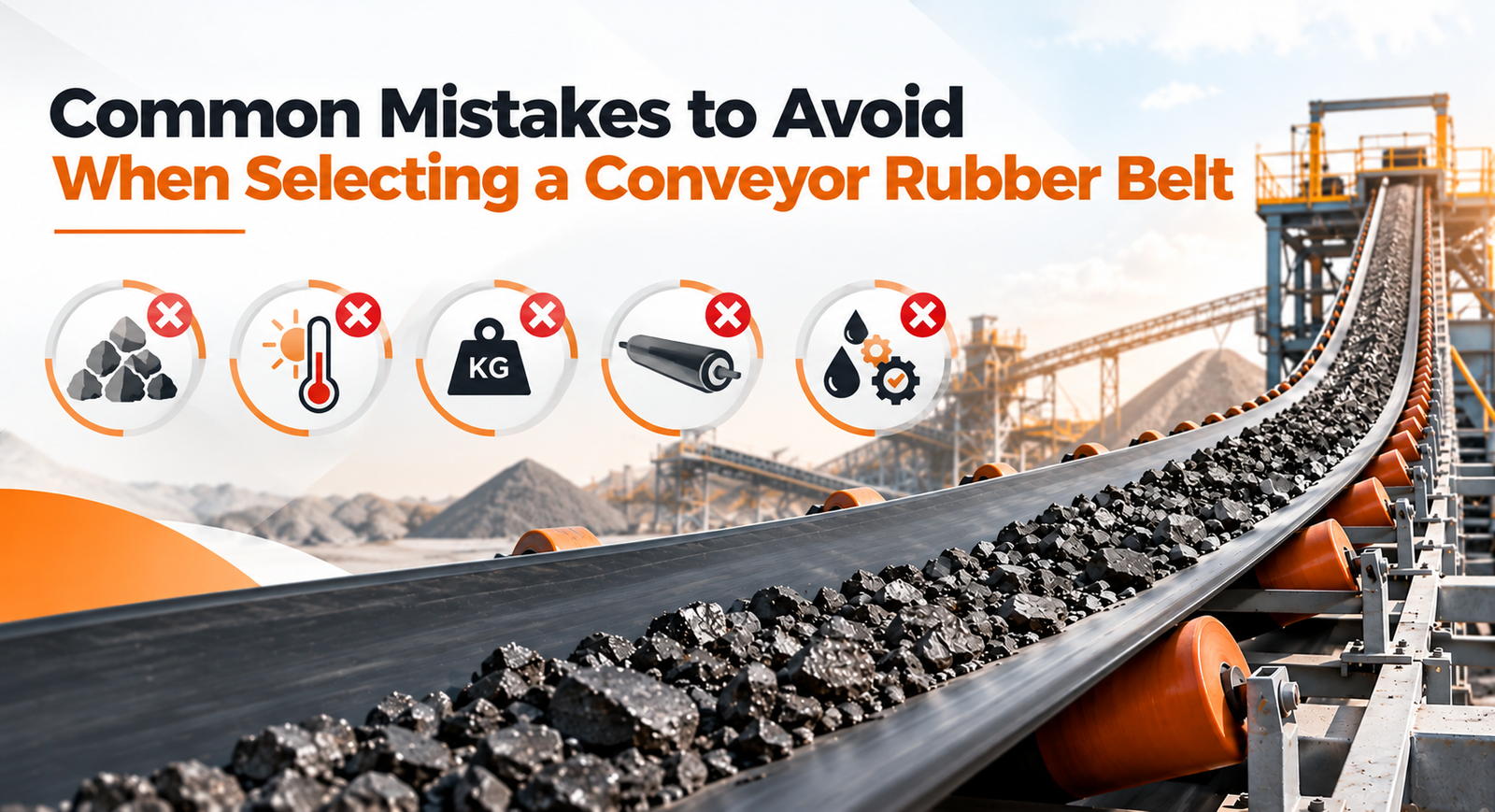
Common Mistakes to Avoid When Selecting a Conveyor Rubber Belt

Common Mistakes to Avoid When Selecting a Conveyor Rubber Belt

Incorrect belt selection can create compatibility issues, unnecessary wear or operational difficulties. The following mistakes are worth avoiding.

  1. Selecting only by purchase price: A lower initial price does not necessarily represent the lowest total ownership cost. Consider suitability, maintenance, replacement requirements and operating demands.
  2. Ignoring material abrasiveness: Material size, sharp edges and impact can affect wear and the required belt construction.
  3. Underestimating throughput: Peak loading and material surges can affect the conveyor’s required capacity.
  4. Ignoring conveyor speed and geometry: Belt width, speed, incline and transfer arrangements must work together.
  5. Failing to check pulley compatibility: Pulley diameter and configuration must suit the belt’s construction and operating tension.
  6. Overlooking environmental exposure: Dust, moisture, temperature and chemicals can affect material suitability.
  7. Adjusting tension without diagnosing the cause: Excessive tension can increase mechanical stress, while insufficient tension may contribute to slippage.
  8. Providing incomplete quotation details: Missing information about the material, operating conditions or conveyor layout can lead to unsuitable recommendations.
  9. Neglecting maintenance access: Inspection, cleaning and replacement requirements should be evaluated before installation.
  10. Skipping manufacturer verification: Final specifications should be checked against the belt manufacturer’s data and the complete conveyor design.

A structured selection process helps reduce avoidable errors and supports more informed procurement decisions.

Conclusion

A conveyor rubber belt is an essential component of many industrial material-handling systems, transporting materials between production, processing, storage and dispatch areas. Its performance depends not only on belt construction but also on the way it interacts with the conveyor drive, pulleys, rollers and tensioning arrangement.

Choosing a suitable belt requires a clear understanding of material characteristics, normal and peak loading, required throughput, conveyor speed, operating environment and conveyor geometry. Component compatibility, inspection access and maintenance requirements should also be considered before purchasing.

For industrial buyers, the most practical approach is to document the application, evaluate the relevant technical requirements and verify the proposed specification against manufacturer data. This helps establish a sound basis for selection without relying on generic recommendations or unsupported performance claims.

Nisuka Industries lists conveyor rubber belts alongside conveyor head and tail drums, idler rollers, belt tensioners, SMSR gearboxes and other industrial components in its published product portfolio.

FAQS

Start by identifying the material, required throughput, load, conveyor speed, length, incline and operating environment. Then evaluate belt construction, strength, pulley compatibility, tensioning and maintenance requirements. Compare the proposed specifications with manufacturer data and consult a qualified conveyor engineer where calculations or application-specific decisions are needed.

Key factors include material size, weight, abrasiveness, moisture, temperature, required throughput, conveyor speed, length, incline, operating tension and environmental exposure. Belt reinforcement, pulley diameter, loading impact and maintenance access also matter. The importance of each factor depends on the conveyor’s actual configuration and intended operating duty.

Service life can be influenced by abrasion, impact, excessive tension, misalignment, material buildup, temperature, moisture, chemical exposure and maintenance practices. Incorrect pulley compatibility or damaged joints can also contribute to premature deterioration. Actual service life varies with the application and should not be estimated using a universal figure.

A conveyor belt operates as part of a mechanical system, not as an independent component. Its suitability depends on the material being conveyed, throughput, speed, geometry, operating tension, drive arrangement and environmental conditions. Evaluating these factors together helps engineers verify compatibility and avoid selection decisions based on incomplete specifications.