
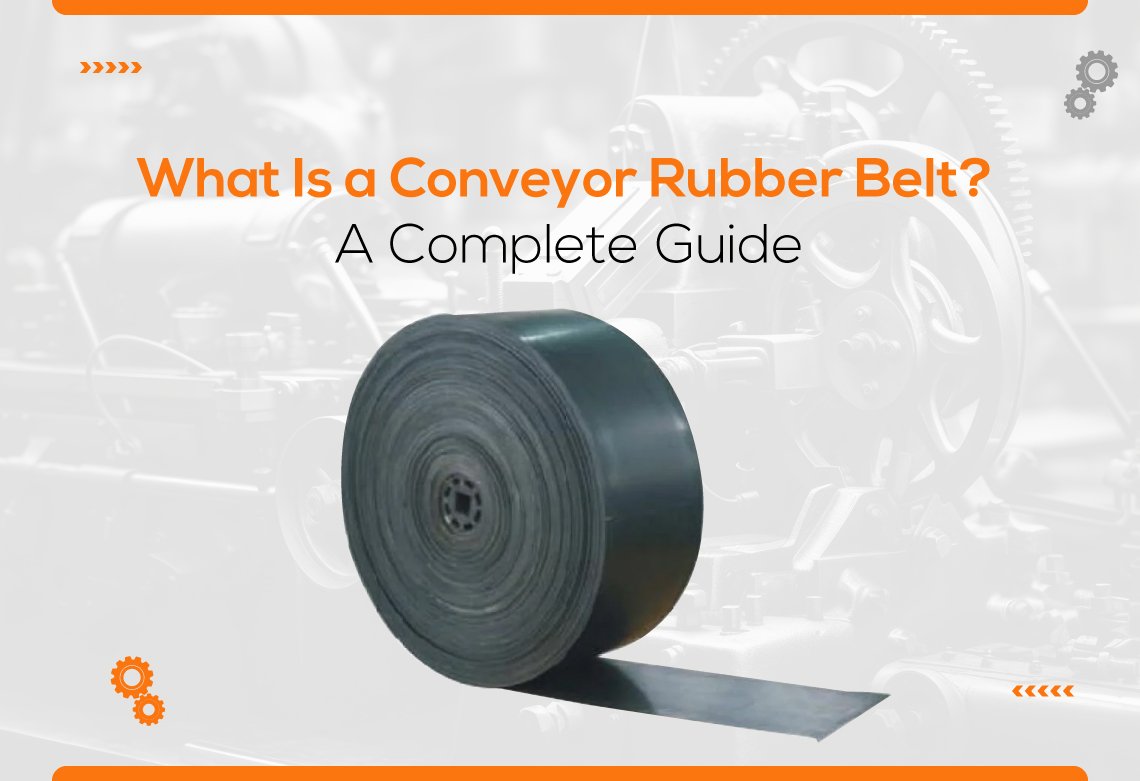
What Is a Conveyor Rubber Belt? – A Complete Guide
Conveyor systems play an important role in industrial material handling by moving raw materials, work-in-progress products, and finished goods between different stages of an operation. From transporting extracted minerals in mining facilities to moving aggregates in quarries and materials through cement plants, these systems support a more organized and continuous flow of materials.
At the centre of many of these systems is the conveyor rubber belt. It provides the moving surface that carries materials along a defined route, working with pulleys, rollers, tensioning arrangements, and drive equipment. However, selecting a suitable belt involves more than identifying its width or comparing purchase prices. Material characteristics, load, throughput, operating speed, conveyor geometry, and environmental exposure all influence suitability.
Understanding what a conveyor rubber belt is, how it works, and how it interacts with other mechanical components helps engineers, plant managers, and procurement teams make better equipment decisions.
This guide explains conveyor rubber belt operation, industrial applications, practical benefits, selection considerations, maintenance requirements, and common operating problems. It also outlines how the belt fits into the complete conveyor system, helping buyers evaluate their requirements before consulting a manufacturer or conveyor engineering professional.
What Is a Conveyor Rubber Belt?
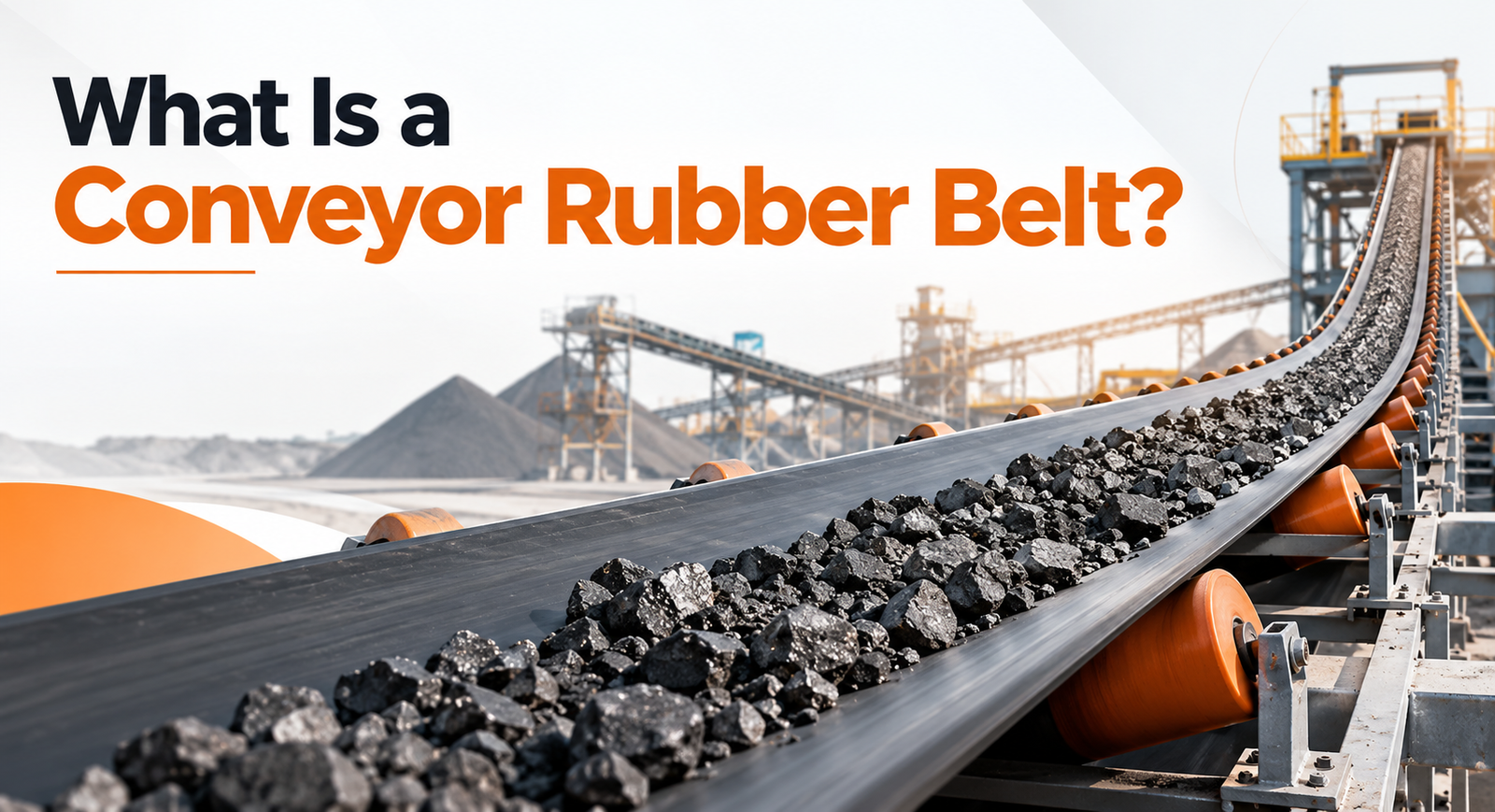
A conveyor rubber belt is a continuous conveying surface used to transport materials along a conveyor system. Depending on its design, it may contain rubber covers and reinforcement layers that help it withstand operating tension, abrasion, flexing, and environmental exposure. Its construction must match the material being conveyed and the mechanical demands of the application.
Unlike a complete conveyor system, which includes the drive, pulleys, support rollers, frame and other components, the belt is the moving element that carries the material.
In bulk material handling, the belt commonly travels in a continuous loop. Material is loaded onto its carrying side, transported along the conveyor route, and discharged at a designated transfer point. The empty return side then travels back towards the loading area.
The belt’s suitability depends on its intended duty. A conveyor transporting abrasive crushed stone has different requirements from one handling packaged components in a manufacturing facility. The selected construction must accommodate the required strength, flexibility, surface properties, and operating conditions.
How Does a Conveyor Rubber Belt Work?
A conveyor rubber belt works by circulating around pulleys while a drive arrangement supplies the force required to move it. An electric motor and gearbox may provide the necessary speed reduction and torque, depending on the conveyor design.
The operating sequence generally involves these steps:
- Power generation: An electric motor converts electrical energy into rotational motion.
- Speed and torque control: A gearbox, where required, adjusts the output speed and torque to suit the conveyor’s operating requirements.
- Belt movement: The drive pulley transfers motion to the belt through available traction. The drive arrangement must provide sufficient traction for the operating load.
- Material transportation: Material is deposited onto the carrying side and moves along the conveyor route.
- Belt support: Idler rollers support the belt and load at appropriate points, according to the conveyor configuration.
- Material discharge: The belt passes around a discharge pulley or another designed transfer arrangement, allowing the material to leave the conveying surface.
- Return movement: The belt travels back towards the loading point to repeat the cycle.
The exact arrangement depends on the conveyor layout, drive location, loading method, and discharge requirements.
Belt tension is necessary to maintain the required drive traction and support stable operation. Belt tracking is equally important because the belt must remain correctly positioned on the conveyor. Inadequate tension, excessive tension, misaligned pulleys, or uneven material loading can contribute to operating problems.
Benefits of Using Conveyor Rubber Belts
The benefits of conveyor rubber belts depend on suitable design, correct installation and appropriate maintenance. When these conditions are met, they can support reliable material movement across a wide range of industrial processes.
1. Continuous Material Transportation
A conveyor belt can move material repeatedly along a defined route without requiring individual loads to be transported manually. This is particularly useful in production facilities, quarries and bulk material handling operations where materials must move between several process stages.
The practical benefit depends on whether the conveyor’s capacity and speed match the requirements of the connected equipment.
2. Support for Bulk Material Handling
A conveyor belt can move material repeatedly along a defined route without requiring individual loads to be transported manually. This is particularly useful in production facilities, quarries and bulk material handling operations where materials must move between several process stages.
The practical benefit depends on whether the conveyor’s capacity and speed match the requirements of the connected equipment.
3. Integration With Automated Processes
A conveyor belt can move material repeatedly along a defined route without requiring individual loads to be transported manually. This is particularly useful in production facilities, quarries and bulk material handling operations where materials must move between several process stages.
The practical benefit depends on whether the conveyor’s capacity and speed match the requirements of the connected equipment.
4. Adaptability to Different Conveyor Layouts
Conveyor systems can be configured for horizontal transportation, inclined movement and different transfer arrangements. The belt must be selected to suit the geometry and material-handling requirements of the installation.
Inclined applications, for instance, may require particular consideration of surface characteristics and material rollback.
5. Potential Reduction in Manual Material Movement
Where a conveyor replaces repetitive manual transportation, it may reduce the need for workers to move individual loads between process locations. The suitability of this approach depends on the material, workplace layout, safety requirements, and process design.
6. Support for Planned Material Flow
A properly designed conveyor can help coordinate material movement between connected production stages. When its capacity matches upstream and downstream equipment, it can contribute to a more predictable operating process.
7. Operational Efficiency Through Correct Selection
A belt that suits the application and operates with compatible pulleys, rollers and tensioning equipment can help maintain stable material movement. However, operational efficiency also depends on loading conditions, alignment, drive performance, maintenance, and the overall conveyor design.
These benefits should be evaluated against the requirements of the specific operation rather than assumed for every installation.
Factors to Consider When Choosing a Conveyor Rubber Belt
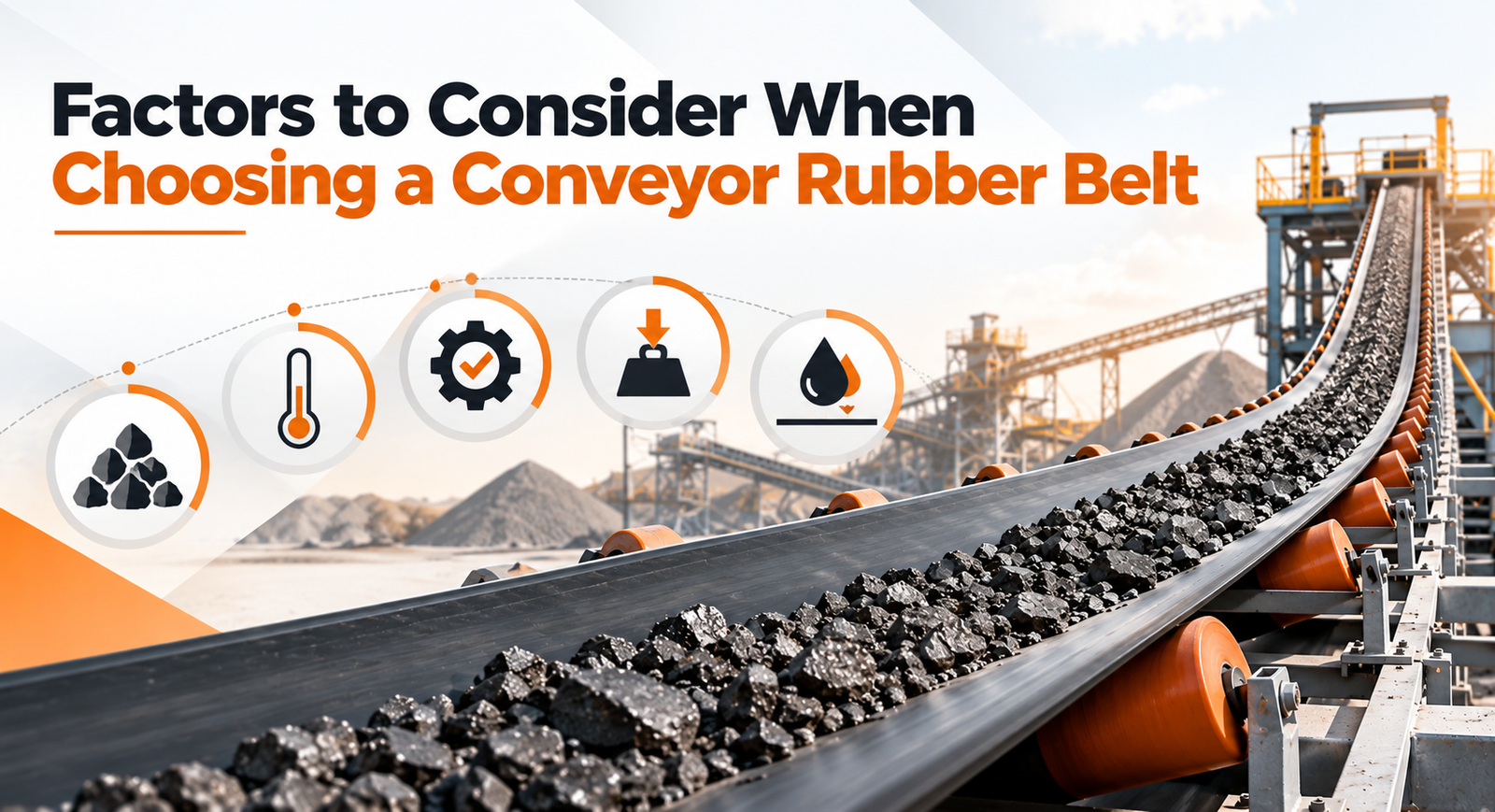
The most important factors to consider when choosing a conveyor rubber belt relate to the material, required throughput, mechanical loading, conveyor geometry, environment and maintenance requirements. A suitable belt must meet the demands of the complete application.
1. Material Characteristics
Start by identifying the material the conveyor will carry. Relevant properties include particle size, bulk density, weight, abrasiveness, sharp edges, moisture content and temperature. Chemical exposure may also matter in certain industrial processes.
These characteristics influence the required belt cover and construction. For example, sharp-edged aggregate can cause different wear patterns from fine, relatively smooth material. Damp material may also affect loading, discharge and material buildup.
Record the actual material properties before requesting a belt specification.
2. Load and Conveying Capacity
The weight of material on the belt, the required throughput and the belt’s allowable operating capacity are related but distinct considerations.
Throughput is generally expressed as mass transported per unit of time, such as tonnes per hour. The required capacity depends on factors including belt width, belt speed, material density, loading cross-section and the conveyor’s geometry.
Peak loading must also be considered. A conveyor that normally handles a moderate flow may experience greater loading during surges or uneven feeding.
Capacity should be established through appropriate engineering calculations and verified against the conveyor and belt manufacturer’s data. A simple estimate based on speed alone is insufficient.
3. Conveyor Speed
Conveyor belt speed affects how much material can be transported, how material is loaded and how it behaves at transfer and discharge points.
Higher speed does not automatically mean better performance. It must be evaluated alongside belt width, material properties, loading arrangements and the requirements of connected equipment.
The selected speed should support the required throughput while maintaining acceptable material control and operating conditions.
4. Conveyor Length, Incline, and Configuration
The distance between pulleys, conveyor elevation, incline, take-up arrangement and transfer-point locations all influence belt selection.
Longer conveyors can involve different tension requirements from shorter installations. Inclined conveyors require additional consideration of material movement and the belt surface’s ability to carry the intended load without unacceptable rollback.
Pulley diameter and arrangement also matter because the belt must flex around the pulleys without exceeding the limits specified for its construction.
5. Operating Environment
Assess the conditions in which the conveyor will operate. These may include:
- Dust and abrasive particles.
- Moisture and wet material.
- Outdoor exposure and weather variation.
- Elevated or changing temperatures.
- Contact with oils or chemicals.
- Material contamination and buildup.
The belt’s rubber compound, covers and reinforcement must be appropriate for the actual exposure conditions. Do not assume that a belt suitable for a dry indoor plant will also suit a wet or chemically exposed installation.
6. Belt Strength and Reinforcement
The belt must withstand the operating tension and other mechanical demands of the conveyor. Its strength requirements depend on the conveyor design, loading, drive arrangement, belt length, and operating duty.
Reinforcement forms part of the belt’s construction and influences how it responds to tension and flexing. The appropriate construction should be determined from the application’s engineering requirements, not selected using a generic rule.
Always verify the proposed belt’s rated characteristics and construction with the manufacturer.
7. Pulley Compatibility and Belt Tension
The belt, pulleys and tensioning arrangement must work together. Pulley diameter, drive traction, alignment and the available take-up range all influence belt operation.
Insufficient tension may contribute to drive slippage, while excessive tension can increase mechanical loading on the belt and associated components. Neither problem should be addressed simply by increasing or decreasing tension without checking the manufacturer’s requirements.
Where the conveyor design requires a dedicated tensioning component, reviewing a suitable conveyor belt tensioner can help buyers understand the role of tension management in the complete system.
8. Maintenance and Service Requirements
Maintenance access should be considered before purchasing a belt. Engineers should assess whether they can inspect the belt, check tracking, examine joints and edges, remove material buildup and service the pulleys and rollers safely.
The belt’s construction, operating environment and duty cycle influence inspection and replacement requirements. Manufacturer guidance should determine appropriate maintenance practices and inspection frequency.
A belt that appears suitable on paper may be less appropriate if its installation or inspection requirements cannot be managed effectively at the site.
How to Choose the Right Conveyor Rubber Belt for Different Industrial Applications
Selecting the right conveyor rubber belt requires a systematic evaluation of the material, mechanical demands and operating environment. The following process provides a practical starting point for industrial buyers and engineering teams.
Step 1: Identify the material
Record the material type, particle size, bulk density, abrasiveness, moisture, temperature and any chemical exposure.
Step 2: Establish throughput and operating duty
Determine normal and peak material flow, required conveyor speed, daily operating hours and the expected duty cycle.
Step 3: Confirm conveyor geometry
Document conveyor length, incline, pulley locations, loading points, discharge points and transfer arrangements.
Step 4: Check mechanical compatibility
Review belt strength, construction, pulley diameter, tensioning arrangements, rollers and drive requirements.
Step 5: Compare specifications and lifecycle requirements
Evaluate manufacturer data, maintenance access, expected wear, replacement planning and total ownership cost before confirming the specification.
How Conveyor Rubber Belts Work With Other Conveyor Components
A conveyor rubber belt is only one element of the material-handling assembly. Its performance depends partly on the compatibility and condition of the mechanical components that support, drive and guide it.
1. Conveyor Head and Tail Drums
Head and tail drums guide the belt around the conveyor loop. In a conventional arrangement, the drive pulley transfers force to the belt, while the tail pulley supports the opposite end. Other arrangements may use different drive or pulley configurations.
Pulley alignment and compatibility with the belt are important for stable operation.
2. Conveyor Idler Rollers
Idler rollers support the belt along its carrying and return paths. Their arrangement depends on the conveyor layout, material load, and required belt support.
Worn, seized, or incorrectly aligned rollers can contribute to belt damage, increased resistance or tracking problems.
Where relevant, industrial buyers can review conveyor idler rollers when evaluating the supporting components needed for their conveyor design.
3. Conveyor Belt Tensioners
Tensioning arrangements help maintain the required belt tension as specified by the system design. Their function is to provide the necessary take-up while accommodating the intended operating conditions.
The correct arrangement depends on conveyor geometry, belt construction and tension requirements. Over-tensioning should not be used as a substitute for correcting alignment or drive problems.
4. Electric Motors and SMSR Gearboxes
The electric motor supplies power, while a gearbox may reduce rotational speed and provide the output torque required by the drive system.
An SMSR gearbox is one option used in conveyor drive applications. Its mounting arrangement and operating characteristics must match the conveyor’s requirements.
Nisuka Industries lists SMSR gearboxes among its industrial product offerings, alongside several conveyor-related components.
5. Pulleys, Bearings and Bearing Housings
V-belt pulleys, taper-lock pulleys, bearings and bearing housings may form part of a conveyor drive or support arrangement, depending on the design.
Their dimensions, mounting, load capacity, alignment and rotational requirements must be compatible with the assembly. A bearing or pulley should not be selected solely on the basis of shaft size without checking its intended duty.
For additional background, see the explanation of what is a bearing?.
Other Material-Handling Components
Magnetic separators, suspension magnets and magnetic drum pulleys may be incorporated into selected conveyor installations to separate unwanted ferrous material from a material stream. They perform a different function from the belt itself and are included only when the process requires magnetic separation.
The central principle is that component selection must consider the complete conveyor design. Not every installation requires every component listed above.
Common Mistakes to Avoid When Selecting a Conveyor Rubber Belt
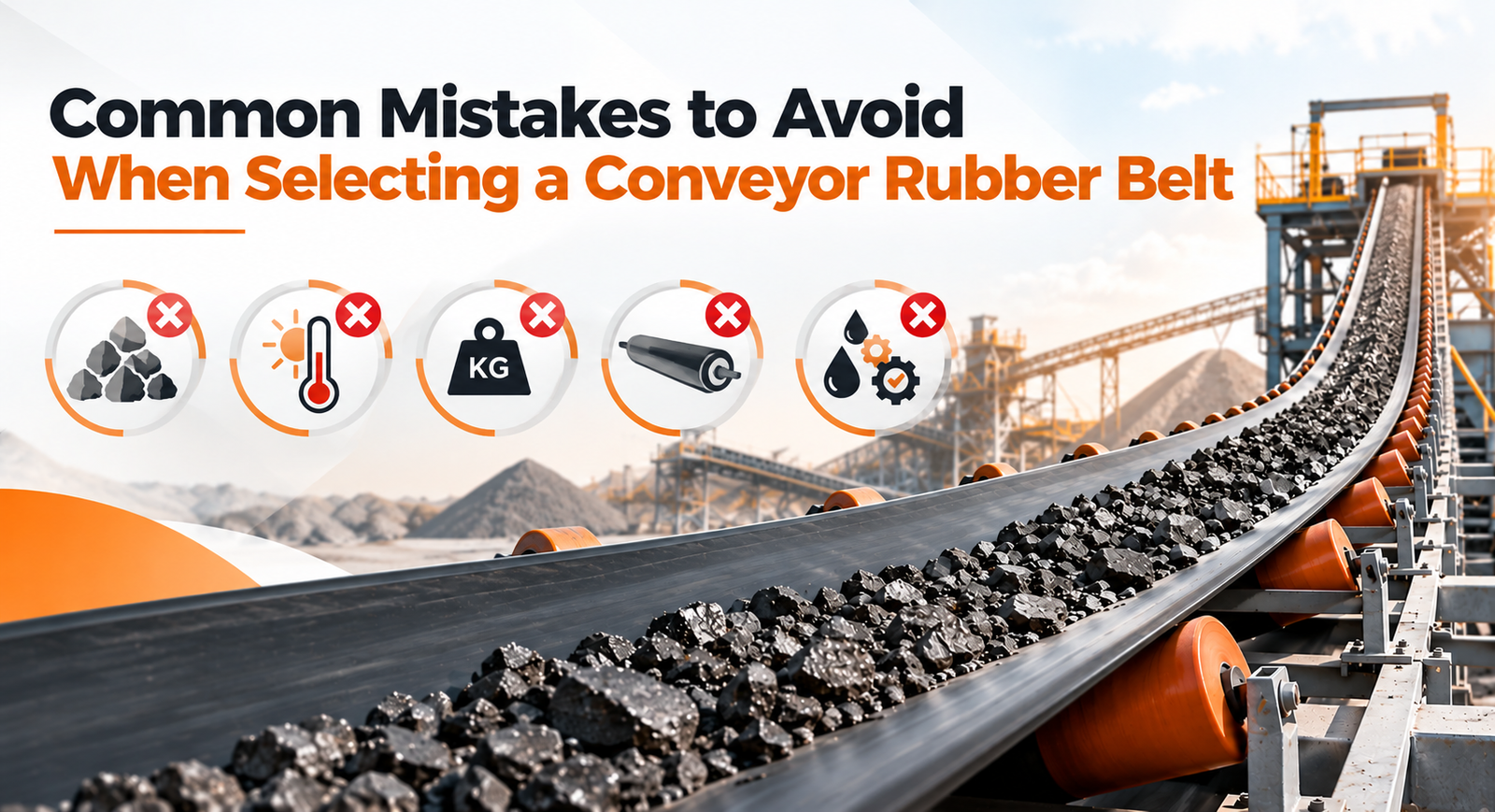
Incorrect belt selection can create compatibility issues, unnecessary wear or operational difficulties. The following mistakes are worth avoiding.
- Selecting only by purchase price: A lower initial price does not necessarily represent the lowest total ownership cost. Consider suitability, maintenance, replacement requirements and operating demands.
- Ignoring material abrasiveness: Material size, sharp edges and impact can affect wear and the required belt construction.
- Underestimating throughput: Peak loading and material surges can affect the conveyor’s required capacity.
- Ignoring conveyor speed and geometry: Belt width, speed, incline and transfer arrangements must work together.
- Failing to check pulley compatibility: Pulley diameter and configuration must suit the belt’s construction and operating tension.
- Overlooking environmental exposure: Dust, moisture, temperature and chemicals can affect material suitability.
- Adjusting tension without diagnosing the cause: Excessive tension can increase mechanical stress, while insufficient tension may contribute to slippage.
- Providing incomplete quotation details: Missing information about the material, operating conditions or conveyor layout can lead to unsuitable recommendations.
- Neglecting maintenance access: Inspection, cleaning and replacement requirements should be evaluated before installation.
- Skipping manufacturer verification: Final specifications should be checked against the belt manufacturer’s data and the complete conveyor design.
A structured selection process helps reduce avoidable errors and supports more informed procurement decisions.
Conclusion
A conveyor rubber belt is an essential component of many industrial material-handling systems, transporting materials between production, processing, storage and dispatch areas. Its performance depends not only on belt construction but also on the way it interacts with the conveyor drive, pulleys, rollers and tensioning arrangement.
Choosing a suitable belt requires a clear understanding of material characteristics, normal and peak loading, required throughput, conveyor speed, operating environment and conveyor geometry. Component compatibility, inspection access and maintenance requirements should also be considered before purchasing.
For industrial buyers, the most practical approach is to document the application, evaluate the relevant technical requirements and verify the proposed specification against manufacturer data. This helps establish a sound basis for selection without relying on generic recommendations or unsupported performance claims.
Nisuka Industries lists conveyor rubber belts alongside conveyor head and tail drums, idler rollers, belt tensioners, SMSR gearboxes and other industrial components in its published product portfolio.
FAQS
1. How do you choose the right conveyor rubber belt?
Start by identifying the material, required throughput, load, conveyor speed, length, incline and operating environment. Then evaluate belt construction, strength, pulley compatibility, tensioning and maintenance requirements. Compare the proposed specifications with manufacturer data and consult a qualified conveyor engineer where calculations or application-specific decisions are needed.
2. Which factors affect conveyor belt selection?
Key factors include material size, weight, abrasiveness, moisture, temperature, required throughput, conveyor speed, length, incline, operating tension and environmental exposure. Belt reinforcement, pulley diameter, loading impact and maintenance access also matter. The importance of each factor depends on the conveyor’s actual configuration and intended operating duty.
3. How can conveyor belt service life be affected by operating conditions?
Service life can be influenced by abrasion, impact, excessive tension, misalignment, material buildup, temperature, moisture, chemical exposure and maintenance practices. Incorrect pulley compatibility or damaged joints can also contribute to premature deterioration. Actual service life varies with the application and should not be estimated using a universal figure.
4. Why should a conveyor belt be selected according to the complete application?
A conveyor belt operates as part of a mechanical system, not as an independent component. Its suitability depends on the material being conveyed, throughput, speed, geometry, operating tension, drive arrangement and environmental conditions. Evaluating these factors together helps engineers verify compatibility and avoid selection decisions based on incomplete specifications.